If you haven't found some series, write to us and we will try to find it!
History
4 episodes
“Life, Larry and the Pursuit of Unhappiness: An Almost History of America” (season 1) — turns American history into a seven-part chain of anxious, petty, and absurdly modern misadventures, as a grumbling Larry-like troublemaker wanders through famous national moments and somehow makes each one about bad manners, personal inconvenience, social panic, and his own bruised ego. Framed around the country’s 250th anniversary, the season treats history less like a classroom lesson and more like a series of uncomfortable conversations that go wrong at the worst possible time: the Declaration of Independence becomes a debate over wording and credit, Alexander Graham Bell’s first phone call opens the door to complaints no invention can solve, political hearings collapse into verbal sparring, and even solemn civil-rights and wartime moments are filtered through awkward timing, selfish objections, and escalating misunderstandings. Barack Obama appears as a wry guide to the premise, while guest figures drift through sketches built around presidents, inventors, activists, soldiers, social climbers, and ordinary bystanders trapped beside the most irritating man in the room. The season’s comedy comes from shrinking great events down to human vanity, stubbornness, and bad etiquette, suggesting that America’s grand story has always had room for arguments over seats, rules, tone, and who gets blamed when everything becomes uncomfortable. “Life, Larry and the Pursuit of Unhappiness: An Almost History of America” (season 1) becomes a sharp historical sketch comedy about national myth, ego, inconvenience, and the ridiculous possibility that the past might have been just as neurotic as the present. (more…)
July
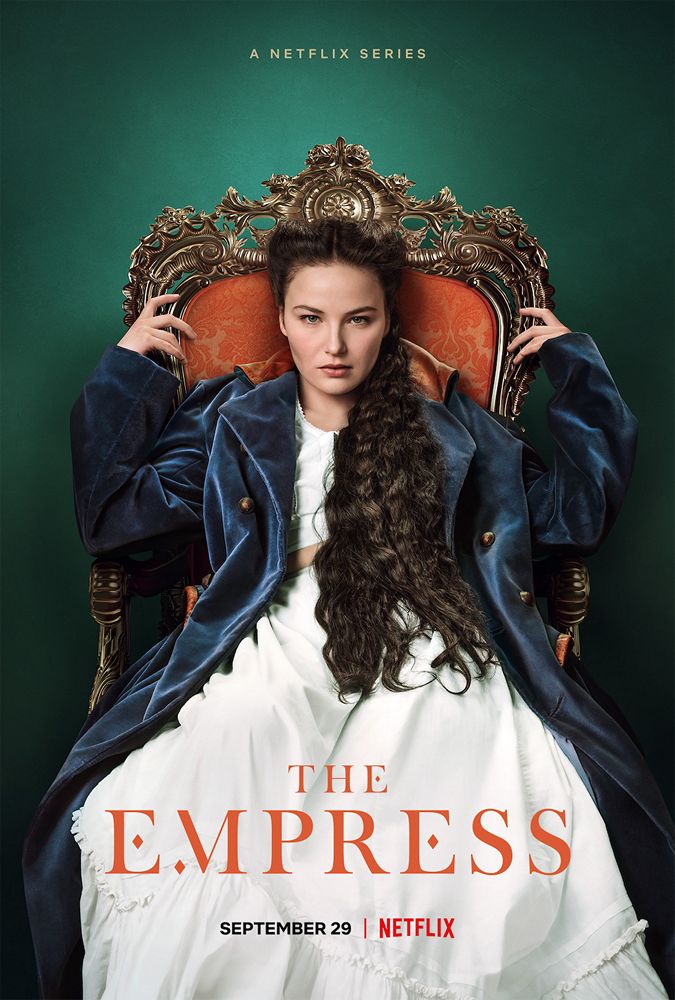
The Empress (season 1)
6 episodes
“The Empress” (season 1) — introduces Elisabeth “Sisi” von Wittelsbach, a free-spirited Bavarian duchess whose life changes when she accompanies her older sister Helene to meet Emperor Franz Joseph, the man Helene is expected to marry. Instead, Franz and Elisabeth are drawn to each other, turning a carefully arranged visit into a scandalous choice that carries Sisi from the countryside into the rigid world of the Habsburg court. In Vienna, her spontaneity and refusal to obey every custom place her at odds with Archduchess Sophie, Franz’s formidable mother, who sees the new empress as politically dangerous and unprepared for the crown. While Franz struggles with war, unrest, and the burden of ruling an empire under pressure, his ambitious brother Maximilian watches for weakness, and Elisabeth tries to understand a palace where affection, duty, surveillance, and power are almost impossible to separate. Her connection with the people beyond the gates brings her closer to the poverty and anger hidden beneath imperial ceremony, while Leontine, Countess Esterházy, and Helene reveal different costs of surviving aristocratic expectations. As court intrigue, family rivalry, public unrest, and a passionate but fragile marriage close around her, Sisi must decide how much of herself she can preserve without abandoning the role she has unexpectedly inherited. “The Empress” (season 1) becomes a lush historical drama about love, freedom, political awakening, and a rebellious young woman discovering that becoming empress may require challenging the very court that crowned her. (more…)
July
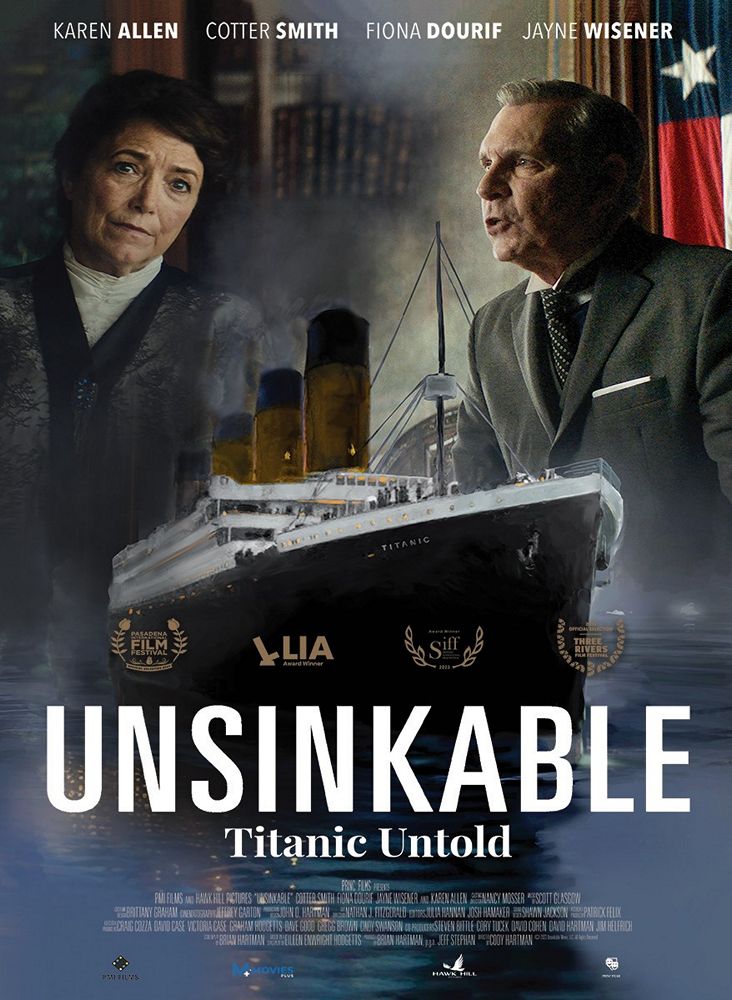
Unsinkable (2024)
“Unsinkable” (2024) — begins in the days after the Titanic disaster, when the RMS Carpathia reaches New York carrying survivors whose testimony may determine whether the sinking is remembered as unavoidable tragedy or preventable failure. Senator William Alden Smith quickly convenes a public inquiry before key witnesses can leave the country, placing himself against shipping interests, political pressure, and officials eager to keep the investigation narrow. At his side, secretary Maggie Malloy organizes a flood of statements, while investigative journalist Alaine Ricard follows contradictions pointing toward ignored warnings, inadequate lifeboats, and decisions shaped by money and reputation. As White Star Line chairman J. Bruce Ismay, surviving officers, wireless operators, passengers, and crew recount the final hours, the hearings are interwoven with flashbacks to the freezing Atlantic, desperate lifeboat launches, acts of sacrifice, and confusion aboard a ship advertised as nearly impossible to sink. Nancy Smith watches the inquiry consume her husband, reminding him that accountability carries personal as well as political costs. With every testimony challenged and every powerful institution seeking distance from blame, the film shifts the familiar Titanic story away from spectacle and toward the struggle to establish responsibility after catastrophe. “Unsinkable” (2024) becomes a sober historical drama about courage, corporate influence, public truth, and the difficult work of ensuring that the dead are not reduced to statistics once the headlines fade. (more…)
July
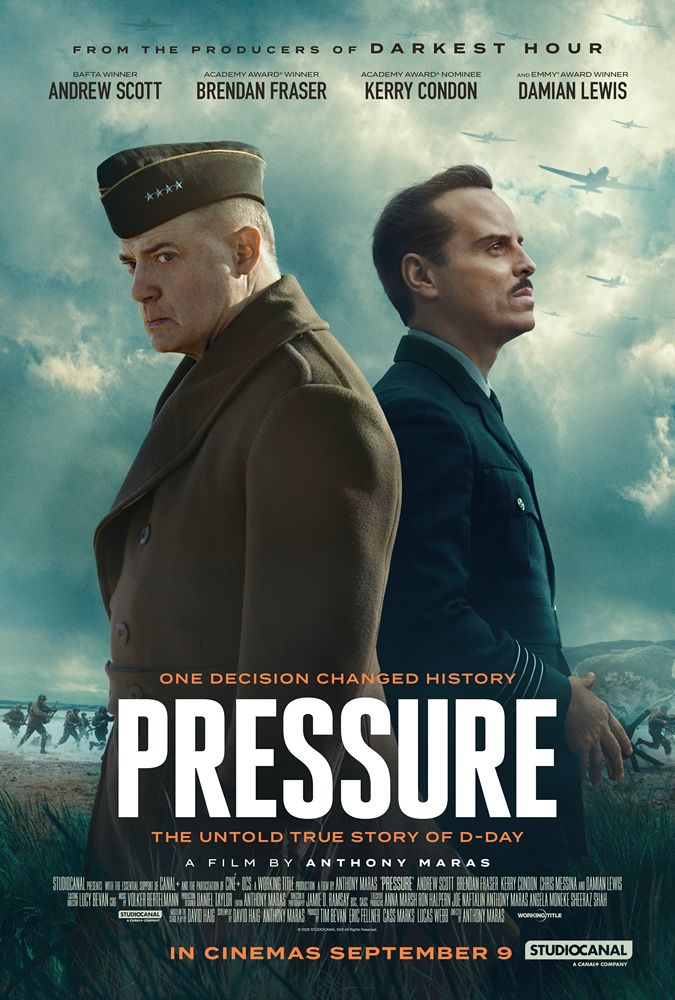
Pressure (2026)
“Pressure” (2026) — unfolds in the final 72 hours before D-Day, when the largest seaborne invasion in history depends not only on ships, soldiers, and strategy, but on the uncertain judgment of a Scottish meteorologist asked to predict the behavior of the sky itself. Group Captain James Stagg arrives at Allied command with grim forecasts, limited data, and the burden of telling General Dwight D. Eisenhower that the weather over the English Channel may turn the planned assault into a catastrophe. Around them, Kay Summersby, Bernard Montgomery, Trafford Leigh-Mallory, John Eisenhower, Irving P. Krick, and other military voices bring competing instincts, political pressure, personal pride, and the terror of delay into rooms where every hour costs secrecy and every mistake could cost thousands of lives. As rain, wind, cloud cover, tides, and clashing weather models become matters of life and death, Stagg must defend science against impatience, doubt, and rival predictions while Eisenhower carries the impossible responsibility of choosing whether to launch or wait. The film turns maps, briefings, coded messages, airfields, and sleepless command rooms into a battlefield before the battlefield, where courage means standing by a forecast no one wants to hear. “Pressure” (2026) becomes a tense historical war drama about responsibility, uncertainty, leadership, and the quiet truth that one of World War II’s most famous military decisions was shaped by men staring at clouds and trying to read the future. (more…)
June
Dear England (season 1)
4 episodes
“Dear England” (season 1) — tracks Gareth Southgate from the shadow of his own missed penalty at Euro 1996 to the uneasy moment he is handed the England job in 2016, when the national team is trapped between public ridicule, tournament trauma, and the heavy mythology of what English football is supposed to mean. Rather than treating management as tactics alone, Southgate begins rebuilding the squad from the inside, working with psychologist Pippa Grange to confront fear, pressure, masculinity, and the emotional damage carried by players who have grown up under impossible scrutiny. Around him, figures like Greg Dyke, Greg Clarke, Steve Holland, Harry Kane, Raheem Sterling, Jordan Pickford, Dele Alli, Marcus Rashford, Bukayo Saka, Jadon Sancho, Jude Bellingham, and Wayne Rooney reflect different generations of expectation, talent, vulnerability, and public judgment. As dressing-room conversations, penalty practice, press conferences, political tensions, and tournament nights collide, the season turns football into a story about identity, leadership, racism, media pressure, and the burden of trying to heal a country through a team that keeps being asked to carry more than sport. “Dear England” (season 1) becomes an emotional sports drama about failure, hope, and the quiet revolution of a manager who tries to teach England how to lose its fear before it can learn how to win. (more…)

May
Amadeus (season 1)
5 episodes
“Amadeus” (season 1) follows the meteoric rise of Wolfgang Amadeus Mozart as he storms through the courts and salons of imperial Vienna, dazzling audiences with genius so effortless it borders on the supernatural, while court composer Antonio Salieri watches his own carefully built world begin to fracture under the weight of envy, admiration, and fear. As Mozart’s fame spreads, whispers of his unconventional methods unsettle the rigid musical establishment. Invitations from powerful patrons begin to shift the political balance of the court, drawing both composers into a web of influence they cannot fully control. Salieri’s growing obsession with understanding Mozart’s brilliance pushes him toward choices that blur the line between reverence and rivalry. And every new triumph Mozart achieves deepens the cracks forming beneath Vienna’s glittering façade. As political intrigue tightens around the Habsburg court and Mozart’s brilliance draws both patrons and enemies, the two men become locked in a dangerous dance of ambition, obsession, and unspoken rivalry that threatens to consume them both. In a world where art is power and reputation is survival, “Amadeus” (season 1) becomes a lavish, psychologically charged descent into the price of genius and the darkness it can awaken in those who stand too close. (more…)
April
The Faithful (season 1)
6 episodes
“The Faithful” (season 1) — reimagines the early chapters of Genesis through the eyes of the women whose choices, sacrifices, and defiance shaped the foundations of Judaism, Christianity, and Islam, centering the narrative on figures like Sarai/Sarah and Hagar as they navigate power, faith, survival, and the brutal politics of ancient kingdoms. The season traces Sarai’s refusal to submit to a forced marriage, her bond with Abram, and the spiritual calling that uproots their lives, while Hagar’s journey from Pharaoh’s court to Abram’s household exposes the collision between freedom, loyalty, and destiny. As their paths intertwine, shifting alliances and divine interventions push each woman toward decisions that carry consequences far beyond their own lives. And the growing tension between personal desire and sacred obligation becomes the driving force that reshapes every relationship around them. As famine, exile, and divine promises push the characters across deserts and empires, the series reframes iconic biblical events through intimate emotional stakes — rivalries between women, the cost of obedience, and the fragile balance between personal agency and divine will. “The Faithful” (season 1) positions itself as a grounded, character‑driven retelling where ancient scripture becomes a human story of resilience, betrayal, and the birth of three great faith traditions. (more…)
April
Peaky Blinders: The Immortal Man (2026)
“Peaky Blinders: The Immortal Man” (2026) — follows Tommy Shelby, now living in self‑imposed exile as World War II engulfs Britain, haunted by ghosts both literal and psychological while trying to bury the violent legacy that once defined him. His isolation shatters when he learns that his estranged son Duke, now leading the Peaky Blinders, has become entangled in a Nazi operation to flood the British economy with counterfeit currency — a real historical scheme known as Operation Bernhard — threatening not only the nation but the Shelby family itself. Drawn back into a bomb‑scarred Birmingham, Tommy confronts a city reshaped by war, shifting loyalties, and the ruthless ambitions of Nazi agent John Beckett, whose manipulation of Duke forces a collision between father and son. As Tommy moves through the ruins of his old empire, he finds former allies hardened by wartime desperation and old enemies newly empowered by the chaos. And every step he takes toward Duke pulls him deeper into a conflict where blood ties and political agendas blur into something far more dangerous than any gang war he’s fought before. As visions of the dead bleed into reality and Kaulo Chiriklo’s supernatural presence pushes Tommy toward buried truths, he must navigate a labyrinth of betrayal, grief, and wartime espionage to stop a plot capable of destroying everything he once fought to control. “Peaky Blinders: The Immortal Man” (2026) becomes a grim, operatic final chapter where family, fate, and the ghosts of the past converge, demanding one last reckoning from a man who has spent his life outrunning death. (more…)
March
When Calls the Heart (season 13)
12 episodes
“When Calls the Heart” (Season 13) — follows Hope Valley as the town pulls itself together in the aftermath of a devastating wildfire, forcing its residents to rebuild not only homes and livelihoods but the emotional foundations that have held the community together for over a decade, while Elizabeth Thornton and Mountie Nathan Grant’s long‑developing romance finally begins to deepen in a way that reshapes their families and the rhythms of the town. As Elizabeth settles into life in Cape Fullerton with Little Jack and navigates the delicate balance between motherhood, teaching, and a new relationship, Nathan works to prove himself to Charlotte, the mother of Elizabeth’s late husband, whose unexpected presence brings both tension and warmth as she and Nathan form an unlikely bond that challenges old grief and opens new possibilities. Across Hope Valley, familiar faces confront their own turning points — Rosemary and Lee juggle parenthood and community responsibilities, Faith faces professional crossroads, and Bill Avery grapples with the limits of his authority as new conflicts and unresolved histories surface. The season threads personal stories with the town’s ongoing recovery, weaving moments of quiet resilience, rekindled memories, and shifting loyalties as Hope Valley moves toward a future shaped by loss, renewal, and the fragile hope that love can grow even in the shadow of what came before. “When Calls the Heart” (Season 13) positions itself as a warm chapter where healing, romance, and community intertwine against the backdrop of a town learning to rise again. (more…)
March
Call the Midwife (season 15)
8 episodes
“Call the Midwife” (Season 15) — follows Nonnatus House as it steps into 1971, a year when the world outside grows louder, harsher, and more politically charged, pushing the midwives into a new era where the Women’s Liberation Movement erupts right outside their door and even the most steadfast sisters feel the tremor of change reverberating through their routines. While senior members return from a mercy mission in Hong Kong carrying both hope and uncertainty, the younger midwives are left to shoulder Poplar’s crises alone, navigating cases that cut deeper than ever — premature births, placenta previa, tuberculosis, kidney cancer, and even modern‑day slavery, each one a reminder that compassion is often demanded in its most brutal form. Sister Julienne, long burdened by the weight of tradition, finds herself unexpectedly invigorated by the shifting tides, embracing change with a renewed sense of purpose that unsettles and inspires the house in equal measure. Amid the medical emergencies and social upheaval, personal lives fracture and evolve: Rosalind and Cyril’s relationship is tested by family judgment and cultural tension, forcing them to confront what love costs in a world that doesn’t always welcome it. As Poplar transforms and the NHS strains under new pressures, the midwives fight to preserve their mission, their community, and the fragile bonds that hold Nonnatus House together. “Call the Midwife” (Season 15) positions itself as a tender, politically charged chapter where faith, duty, and womanhood collide against the backdrop of a society learning — painfully — how to change. (more…)