If you haven't found some series, write to us and we will try to find it!
Movies
February
Forgive Us All (2025)
“Forgive Us All” (2025) — follows Rory, a grieving mother surviving in a post‑apocalyptic New Zealand where a viral outbreak has turned humans into violent cannibalistic creatures known as Howlers. After burying her daughter and killing her infected husband, she isolates herself in a rural compound with her father‑in‑law Otto, barely holding on to purpose as government‑run survivor camps tighten control over the remaining population. When Noah, a wounded escapee carrying a potential cure, arrives pursued by agents from the authoritarian G.M.A. organization, Rory is forced back into the world she’s been trying to shut out. Noah’s arrival forces her to confront the parts of herself she tried to bury along with her family. The fragile safety of the farm begins to collapse the moment she chooses to shelter him. Government forces led by Logan close in, turning the farm into a battleground where Otto makes a final stand, and Rory must decide whether to risk everything to protect Noah and the serum. As loyalties fracture and the line between survival and morality erodes, the story pushes Rory toward a confrontation with both the regime hunting them and the grief consuming her. “Forgive Us All” (2025) frames itself as a neo‑Western apocalyptic horror about loss, control, and the thin hope of redemption in a world collapsing under violence. (more…)
February
28 Years Later: The Bone Temple (2026)
“28 Years Later: The Bone Temple” (2026) — unfolds in a Britain reshaped by nearly three decades of viral devastation, where the remnants of civilization cling to survival amid feral landscapes, fractured militias, and the lingering terror of the Rage virus. What begins as a search for answers in a world that has forgotten stability draws together a new generation of survivors whose paths converge around a mysterious structure known as the Bone Temple, a towering ossuary built from the dead and rumored to hold clues about the virus’s long‑term evolution. Whispers of shifting infection patterns and sightings of infected behaving in unfamiliar, coordinated ways fuel paranoia across the wasteland, pushing desperate factions toward violent confrontation. Rumors of entire enclaves vanishing overnight deepen the fear that something older and more deliberate may be stirring beneath the chaos. Even the most hardened survivors begin to question whether the infected are evolving or whether the world itself is reshaping them into something far more calculated. As rumors spread of a cult that worships the infected as divine harbingers, the line between faith, madness, and survival grows dangerously thin. As these forces collide, “28 Years Later: The Bone Temple” (2026) positions itself as a brutal, atmospheric continuation of the 28 Years Later legacy — a world where the infected are no longer the only threat, and the living have become just as unpredictable, just as feral, and just as terrifying. (more…)
February
28 Years Later (2025)
“28 Years Later” (2025) returns to a quarantined Britain decades after the Rage Virus outbreak, where a small island community clings to survival behind fortified borders. When 12-year-old Spike is taken to the mainland by his father for a coming-of-age ritual, he discovers a world transformed — nature has reclaimed cities, and the infected have evolved into terrifying new variants, including towering Alphas and grotesque Slow Lows. After uncovering a mysterious fire in the distance, Spike sets out with his ailing mother to find a rumored doctor who may hold answers. Their journey reveals unsettling truths about the infected, including signs of intelligence and emotion, challenging everything survivors thought they knew. Along the way, Spike encounters a reclusive figure named Kelson who offers a haunting philosophy on death and memory. As the boy faces loss, betrayal, and the weight of legacy, he must decide what kind of future is worth fighting for. With striking visuals, emotional depth, and a chilling atmosphere, “28 Years Later” (2025) expands the franchise into a meditative, post-apocalyptic odyssey about grief, survival, and the fragile hope that something new can rise from the ashes. (more…)
February
Marty Supreme (2025)
“Marty Supreme” (2025) — unfolds as a darkly comic, sharply observed portrait of Marty, a swaggering ping‑pong hustler whose carefully curated bravado begins to crack as he drifts through a jittery, time‑bent Los Angeles shaped by Safdie’s frenetic, era‑blurring style. What begins as a simple attempt to regain control of his life becomes a chaotic odyssey through fading Hollywood corners, opportunistic hangers‑on, and the seductive pull of people who mistake his desperation for charisma. His encounters with Kay Stone, a washed‑up movie star clinging to the remnants of her fame, expose how easily Marty slips into roles that promise validation he can’t find on his own. Crossing paths with Milton, a ruthless businessman who sees Marty as both tool and liability, only accelerates his slide into a world where confidence becomes performance and performance becomes survival. As he leans into the persona others project onto him, the line between empowerment and delusion blurs, pulling him deeper into a world where charisma becomes currency and truth bends to whoever speaks it loudest. “Marty Supreme” (2025) positions itself as a satirical, unsettling character study about identity, vulnerability, and the dangerous comfort of being told you’re destined for greatness. (more…)
February
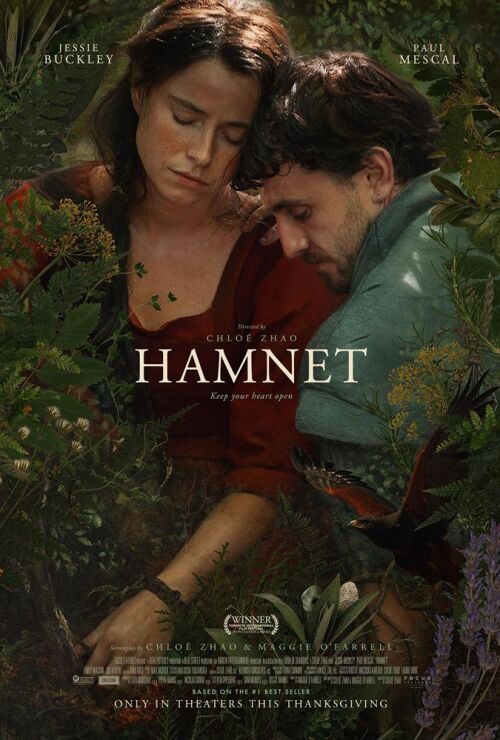
Hamnet (2025)
“Hamnet” (2025) — unfolds as the intimate, quietly devastating story of William Shakespeare and his wife Agnes, their marriage shaped by a fierce, unconventional bond and ultimately shattered by the death of their eleven‑year‑old son, a loss that ripples through every corner of their lives. The film traces the tender rhythms of their family in Stratford, the growing distance as William’s ambitions pull him toward London, and the creeping dread of plague that turns every breath into a threat. A sense of inevitability begins to settle over their home, as if the world around them is tightening its grip in ways they can’t yet name. Moments that once felt ordinary become charged with an unspoken fear, hinting at the fracture that is about to reshape their lives forever. Agnes, deeply attuned to the natural world and the unseen currents of fate, becomes the emotional center of a household bracing for tragedy, her grief rendered with a rawness that lingers long after the moment of loss. William, absent when Hamnet dies, returns to a home hollowed by sorrow, his guilt and longing transforming into the creative fire that will eventually birth Hamlet, a work that becomes both memorial and confession. “Hamnet” (2025) positions itself as a haunting, emotionally charged portrait of love, art, and the unbearable weight of a parent’s grief, where personal tragedy becomes the seed of immortal storytelling. (more…)
February
Jingle Bell Heist (2025)
“Jingle Bell Heist” (2025) — unfolds as Sophia, a sharp‑witted retail worker drowning under financial strain and caring for her ailing mother, crosses paths with Nick, a recently framed ex‑contractor hungry for justice, their lives colliding in a desperate, high‑stakes plan to rob London’s elite department store just days before Christmas. What begins as blackmail‑fueled coercion twists into an uneasy alliance, each of them carrying wounds inflicted by Maxwell Sterling, the ruthless owner whose empire is built on exploitation and lies. As the heist deepens, hidden motives surface, loyalties shift, and the truth behind Sophia’s past detonates with the force of a revelation that rewrites everything they thought they were fighting for. Their mission becomes a tangle of revenge, survival, and reluctant connection, all unfolding against the glittering façade of holiday cheer that barely conceals the rot beneath. “Jingle Bell Heist” (2025) positions itself as a sharp, emotionally charged Christmas caper where justice, identity, and redemption collide in the glow of stolen lights and second chances. (more…)
February
The Summer Book (2025)
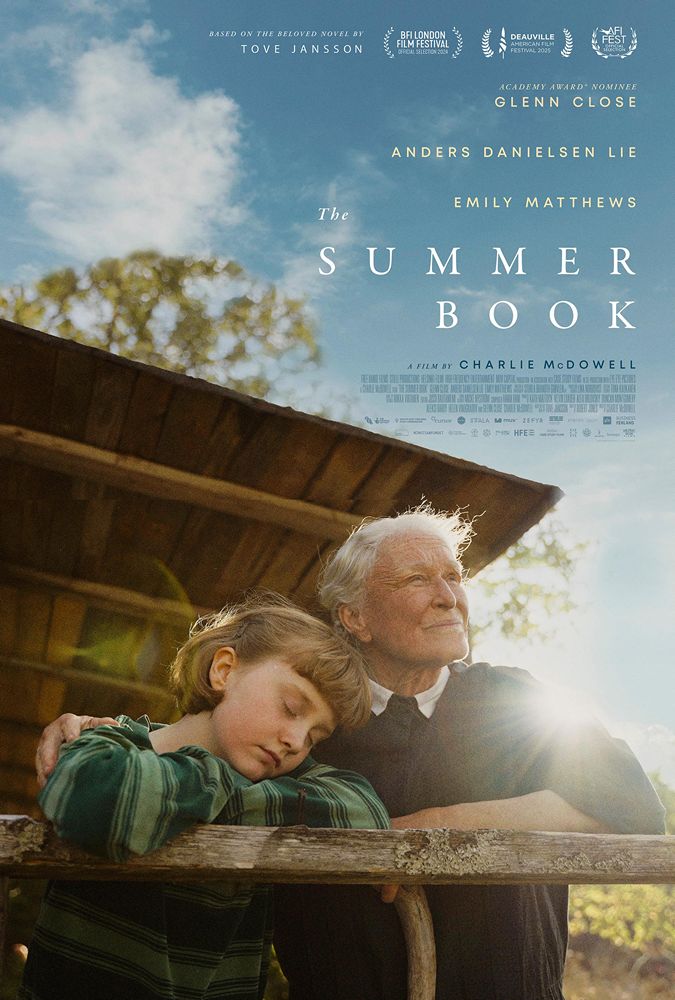
“The Summer Book” (2025) — unfolds as young Sophia spends a quiet, sun‑drenched season on a tiny island in the Gulf of Finland with her grieving father and her sharp‑tongued, fiercely loving grandmother, the three of them circling one another in the aftermath of the mother’s death, each carrying their sorrow differently as the island’s stillness forces them into moments of tenderness, friction, and fragile understanding. The island becomes a kind of emotional mirror, reflecting back the things they try hardest not to say aloud. Even the smallest rituals take on a charged intimacy, as if every shared gesture is an attempt to stitch together what grief has torn apart. Their days drift through rituals of exploration, midsummer celebrations, and small domestic rhythms that reveal the shifting emotional tides between childhood and adulthood, loss and resilience, memory and renewal, while the grandmother’s wry wisdom and Sophia’s restless curiosity form the beating heart of their fragile summer equilibrium. “The Summer Book” (2025) positions itself as a meditative drama where nature becomes both witness and balm, and a family learns to navigate grief not through grand revelations but through the quiet, accumulating weight of shared days. (more…)
February
Kevin Hart: Acting My Age (2025)
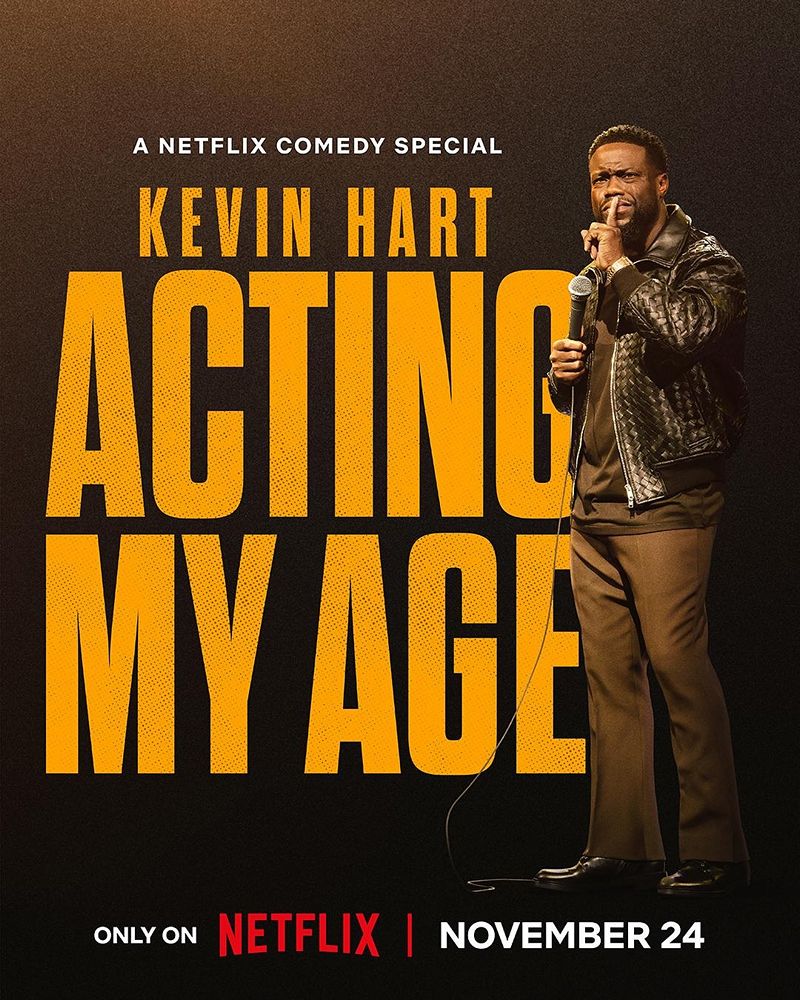
“Kevin Hart: Acting My Age” (2025) — unfolds as Kevin Hart storms the stage with a hyper‑charged, self‑mocking dive into the absurdities of middle age, riffing on intimacy pills, surprise injuries, family chaos, and the creeping panic of realizing that the body no longer obeys the mind with the same reckless loyalty it once did, all delivered with the breathless velocity and physical exaggeration that have become his signature. As Hart ricochets between domestic meltdowns, aging catastrophes, and a wildly inflated jungle‑encounter saga, the special leans into escalation over introspection, ballooning every anecdote into a high‑gloss spectacle where momentum substitutes for meaning and comedy becomes a frantic sprint away from anything too revealing. Beneath the noise, brief sparks of honesty flicker — a tossed‑off line about irrelevance, a moment where bravado slips — hinting at a deeper, sharper show that never fully emerges before being swallowed again by Hart’s relentless, crowd‑pleasing energy. “Kevin Hart: Acting My Age” (2025) positions itself as a loud, polished, middle‑aged misadventure where humor becomes both shield and performance, a kinetic attempt to outrun the weight of growing older while daring the audience to keep up. (more…)
February
Hard Truths (2025)
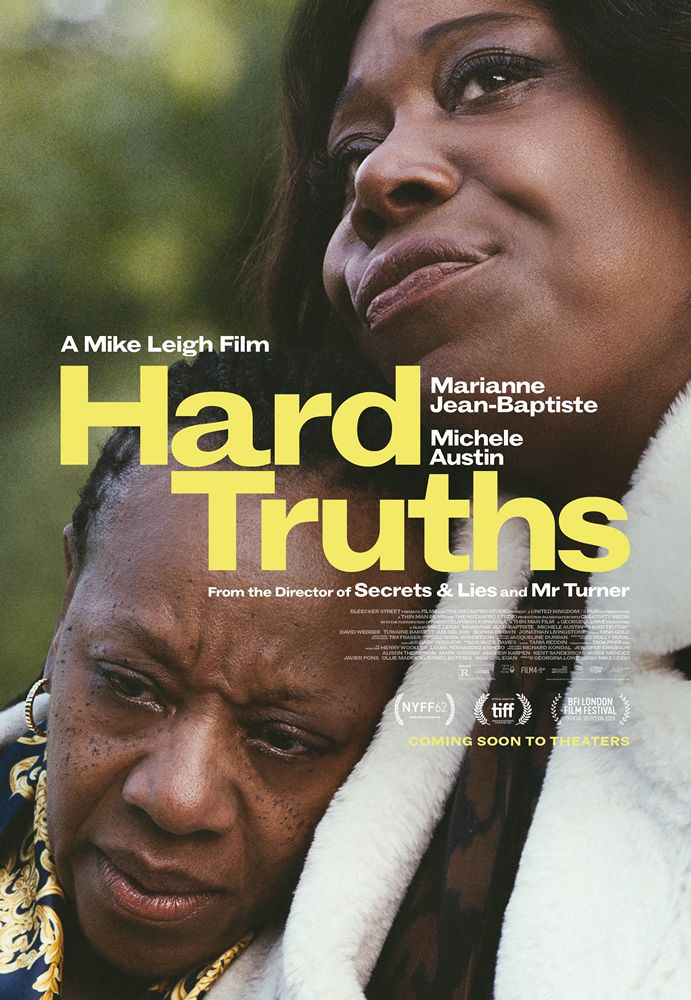
“Hard Truths” (2025) — unfolds as Pansy Deacon, a depressed, anxious, sharp‑tongued London woman whose world has shrunk to the suffocating walls of her tidy home, spirals through days filled with petty fights, misdirected rage, and a gnawing fear that her own family secretly despises her, while her jovial sister Chantelle tries to pull her toward healing as the fifth anniversary of their mother’s death approaches, forcing Pansy into a reckoning she has avoided for years. Her simmering resentment toward her husband Curtley and her unmotivated adult son Moses curdles into constant conflict, each encounter exposing the fractures in a life defined by bitterness and unspoken grief, until a tense visit to their mother’s grave cracks open the truth she has buried: her belief that she was unloved, overlooked, and pushed into a role she never chose. As Chantelle challenges her narrative and offers a rare moment of tenderness, Pansy’s emotional armor falters, revealing a woman terrified of being hated yet unable to stop lashing out, her silence at the family gathering that follows becoming its own quiet confession. “Hard Truths” (2025) positions itself as a raw, intimate character study where anger masks heartbreak, family becomes both wound and refuge, and a woman on the brink must confront the painful possibility that the life she resents is the only one still trying to hold her together. (more…)
January
The Wrecking Crew (2026)
“The Wrecking Crew” (2026) — unfolds as estranged half‑brothers Jonny Hale, a reckless Oklahoma cop drowning in guilt, and James Hale, a disciplined Navy SEAL hardened by distance and duty, are dragged back into each other’s orbit when their father Walter dies in a supposed hit‑and‑run that reeks of orchestration, pulling them into a violent spiral of Yakuza enforcers, corrupt developers, and family secrets sharpened into weapons. Their uneasy reunion in Honolulu turns explosive as they tear through Walter’s ransacked apartment, uncovering casino blueprints, double‑deals, and a feud between power broker Marcus Robichaux and his wife Monica — each secretly hiring Walter to investigate the other — revealing a conspiracy that stretches from political offices to criminal dens. Attacks from Nakamura’s Yakuza faction escalate, the governor applies pressure, and every lead drags the brothers deeper into a war over Hawaiian land targeted for an illegal casino, all while their unresolved resentment erupts: Jonny haunted by his mother’s unsolved murder, James confessing he pushed him away to shield him from the Syndicate’s reach. The brothers are forced to rely on the bond they spent years destroying, crashing through gunfights, betrayals, and buried truths to uncover what their father died trying to expose. “The Wrecking Crew” (2026) positions itself as a bruised, relentless brotherhood thriller where blood ties cut deeper than bullets and justice demands breaking everything in the way. (more…)