If you haven't found some series, write to us and we will try to find it!
May
Obsession (2026)
“Obsession” (2026) — centers on Bear, a lonely music store employee whose quiet fixation on his childhood friend and co-worker Nikki Freeman turns dangerous when he stumbles upon a strange object called the One Wish Willow and uses it to make the one wish he thinks will finally fix his life. At first, the charm seems to give him exactly what he wanted: Nikki’s attention, affection, and emotional intensity suddenly swing toward him, turning years of silent longing into something that looks almost romantic. But the fantasy quickly curdles as Nikki’s love becomes frighteningly absolute, her behavior grows erratic, and Bear begins realizing that forcing another person’s heart to change has consequences no apology can undo. As Ian, Sarah, Carter, and the people around them are pulled into the fallout, the story moves through awkward workplaces, strained friendships, late-night dread, and intimate spaces that start feeling less like romance and more like a trap. The film uses its supernatural premise to explore loneliness, consent, insecurity, and the ugly difference between wanting to be loved and wanting to control love. What begins as a darkly comic wish-fulfillment story slowly tightens into a bleak psychological horror tale, where Bear’s attempt to escape rejection only exposes the selfishness beneath his fantasy. “Obsession” (2026) becomes a twisted supernatural thriller about desire, guilt, and the terrifying price of getting exactly what you asked for. More …
May
The Hunger Games: Catching Fire (2013)
“The Hunger Games: Catching Fire” (2013) — picks up after Katniss Everdeen and Peeta Mellark return to District 12 as victors of the 74th Hunger Games, only to discover that survival has made them symbols the Capitol can no longer fully control. President Snow warns Katniss that her defiance in the arena has inspired unrest across Panem, forcing her and Peeta onto a Victory Tour meant to sell their romance as obedience rather than rebellion. But every speech, ceremony, and carefully staged smile only exposes the anger spreading through the districts, while Gale, Prim, Haymitch, Effie, Cinna, and Peeta each become tied to the dangerous image Katniss never meant to create. As new Head Gamemaker Plutarch Heavensbee circles the Capitol’s political games and Snow prepares a cruel twist for the 75th Hunger Games, Katniss is pulled back into a world of costumes, cameras, alliances, and violence where trust is harder to read than any trap in the arena. The arrival of former victors like Finnick Odair, Johanna Mason, Beetee, and Wiress turns the new competition into something sharper and more unpredictable, with every smile, secret, and weapon hinting that a larger fight is forming beneath the spectacle. “The Hunger Games: Catching Fire” (2013) becomes a darker, more expansive dystopian thriller about propaganda, trauma, resistance, and the dangerous moment when a girl forced to perform for survival begins to understand that the performance itself can become a spark. More …
May
The Hunger Games (2012)
“The Hunger Games” (2012) — centers on Katniss Everdeen, a skilled teenage hunter from the impoverished District 12, whose life in the ruins of Panem is defined by hunger, fear, and the Capitol’s yearly reminder that rebellion is punished through spectacle. When her younger sister Primrose is chosen as a tribute for the 74th Hunger Games, Katniss volunteers in her place and is sent to the Capitol alongside Peeta Mellark, the baker’s son whose quiet kindness and public confession of affection turn their survival into both a strategy and an emotional complication. Guided by the drunken but shrewd former victor Haymitch Abernathy, dressed for the cameras by Cinna, and paraded before audiences by Effie Trinket and Caesar Flickerman, Katniss must learn that staying alive depends not only on archery and instinct, but on sponsors, image, and the cruel appetite of viewers watching from safety. Inside the arena, alliances, traps, fire, engineered beasts, and the threat of stronger Career tributes force her to weigh compassion against survival, especially as her bond with Peeta becomes impossible to separate from the performance the Capitol wants. “The Hunger Games” (2012) becomes a tense dystopian action drama about control, sacrifice, media spectacle, and a young woman whose refusal to play entirely by the rules begins to unsettle the system built to break her. More …
May
Tracker (season 3)
22 episodes
“Tracker” (Season 3) — follows Colter Shaw as he investigates a missing wife and daughter, only to uncover a sinister conspiracy tied to a shadowy organization known as “The Process.” Teaming up with his estranged brother Russell, Colter dives deeper into the mystery surrounding their father’s death, confronting long-buried family secrets and moral dilemmas that test his loyalty and integrity. A coded journal left behind by their father reveals a network of survivalist operatives scattered across the country. Colter’s investigation leads him to a remote compound in Montana, where he narrowly escapes an ambush. Russell begins to question Colter’s motives as their shared trauma resurfaces, threatening to fracture their fragile alliance. Meanwhile, a whistleblower named Kira offers classified intel that could dismantle The Process — but trusting her comes at a cost. As the brothers navigate dangerous alliances and cryptic threats, their mother Mary reemerges with concealed motives that blur the line between protector and betrayer. The investigation forces Colter to question everything he believes about justice, forgiveness, and the legacy of survivalism that shaped his past. With high-stakes action, emotional depth, and shocking revelations, “Tracker” (Season 3) delivers its most personal and suspenseful chapter yet. More …
May
Marshals (season 1)
13 episodes
“Marshals” (season 1) — centers on former Navy SEAL Kayce Dutton as he leaves the Yellowstone Ranch to join a specialized U.S. Marshals unit in Montana, where each operation forces him to confront violent fugitives, buried family history, and the psychological toll of law enforcement. His new beginning fractures immediately when a bombing on Broken Rock Reservation pulls him into a hunt that exposes militia networks, political tensions, and the unresolved ghosts of the Dutton legacy. As Kayce struggles to integrate into the Marshals’ tight‑knit team, his past resurfaces through dangerous encounters that blur the line between duty and personal reckoning, while the unit’s cases escalate from domestic terror threats to conflicts tied to land disputes, corruption, and long‑standing tribal grievances. The deeper he’s pulled into the unit’s operations, the more Kayce realizes that the violence he’s chasing mirrors the turmoil he’s been carrying since leaving the ranch. Each fugitive confrontation forces him to confront the parts of himself he’s tried hardest to bury. The season’s tension builds through shifting alliances, moral compromises, and the growing realization that Kayce’s attempt to outrun his history only drags him deeper into it. “Marshals” (season 1) positions itself as a neo‑Western crime thriller where loyalty, justice, and identity collide, and where every pursuit forces Kayce to choose between the man he was and the one he’s trying to become. More …
May
Bad Thoughts (season 2)
6 episodes
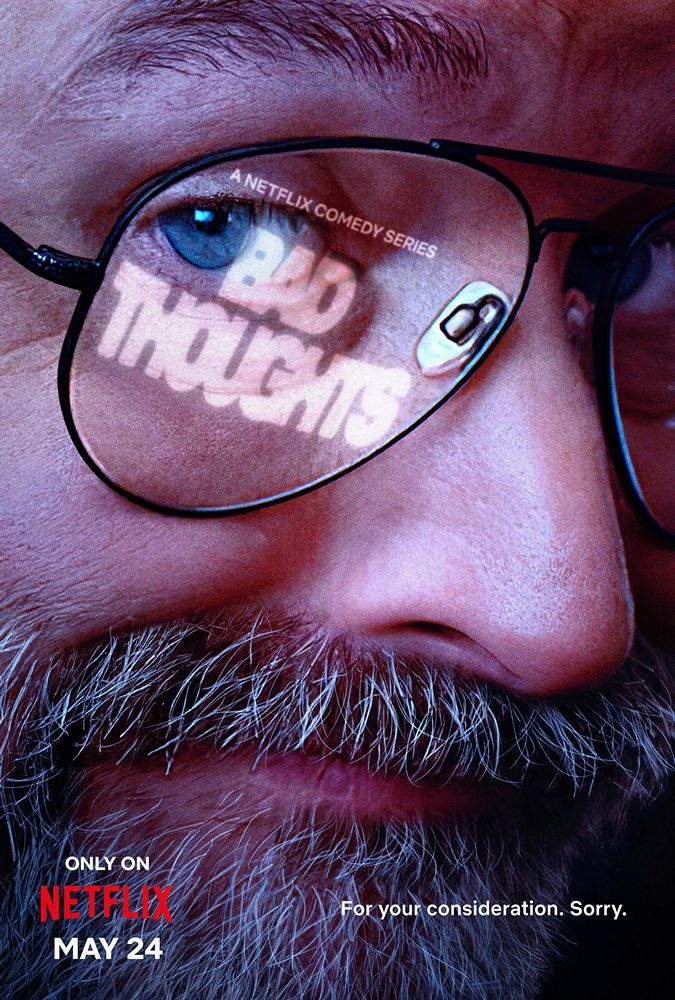
“Bad Thoughts” (season 2) — returns to an unfiltered sketch-comedy universe where everyday anxieties, intrusive fantasies, and awful split-second decisions are blown up into polished, absurd, and deeply uncomfortable little nightmares. Structured as a new run of short, self-contained stories, the season moves through episodes like Bad Impulses, Bad Perspectives, Bad News, Bad Influences, Bad Romance, and Bad Decisions, turning simple setups into escalating disasters: a miracle drug sends a man into chaos, an empty-nester finds a bizarre new brotherhood, a perfect date collapses over one humiliating detail, and a body-swap scenario traps a father inside a situation no parent should have to explain. Across the season, grotesque characters, smug authority figures, doomed husbands, desperate performers, unlucky travelers, and men convinced they are in control stumble into scenarios that punish their ego, cowardice, and worst instincts. The cinematic sketches push into fertility clinics, airport lines, awkward romances, deadly misunderstandings, bizarre career opportunities, and fantasies that expose the ridiculous and cruel parts of human behavior. As each story grows from a bad thought into a full disaster, the season turns private shame and social panic into something both outrageous and weirdly recognizable. “Bad Thoughts” (season 2) becomes a sharper, louder collection of dark comedy about embarrassment, ego, fear, and the terrible things people imagine doing when no one is supposed to know what is happening inside their heads. More …

May
The Audacity (season 1)
8 episodes
“The Audacity” (season 1) — follows Duncan Park, a self‑anointed “inventor of the future” and Silicon Valley tech CEO, whose empire begins to unravel when a data‑exploitation scandal pulls him and his coerced therapist JoAnne Felder into a tightening spiral of white‑collar crime. As Duncan scrambles to preserve his image and JoAnne fights to keep her life from collapsing under blackmail, their families, colleagues, and investors are drawn into a web of ego, ambition, and moral erosion. As the scandal metastasizes, every attempt at spin control only exposes how deeply the company’s culture has been built on denial and delusion. And with each new revelation, the line between innovation and manipulation blurs further, leaving everyone around them unsure whether they’re witnessing a downfall or a reinvention. The season tracks the volatile ecosystem around them — ruthless dealmakers, anxious junior partners, and a billionaire visionary whose erratic genius fuels the chaos — as every attempt at damage control only deepens the fractures beneath the Valley’s glossy façade. “The Audacity” (season 1) becomes a sharp, darkly comedic Silicon Valley drama about power, delusion, and the catastrophic fallout of believing your own myth. More …
May
The Devil Wears Prada 2 (2026)
“The Devil Wears Prada 2″ (2026) — brings Andy Sachs back into Miranda Priestly’s orbit nearly two decades after she walked away from Runway, no longer the uncertain assistant trying to survive the fashion world but a more confident journalist who understands exactly how dangerous Miranda’s attention can be. The reunion comes at a moment when glossy magazines are losing power, luxury brands hold more influence than editors, and Runway’s future depends on alliances Miranda would rather command than request. At the center of that shifting landscape is Emily Charlton, once Miranda’s fiercely loyal assistant and now a formidable executive at a major fashion house whose money, status, and resentment could decide whether Runway survives. As Nigel watches old loyalties bend under new pressures, Andy is pulled between professional curiosity, personal history, and the uncomfortable knowledge that Miranda still knows how to turn ambition into a weapon. From New York offices and high-fashion meetings to Milan, Lake Como, parties, fittings, and perfectly brutal conversations, the film turns the fashion industry’s digital crisis into a battle of image, ego, reinvention, and control. “The Devil Wears Prada 2″ (2026) becomes a sharp, glamorous comedy-drama about legacy, changing power, and the unsettling thrill of discovering that the person you escaped may still be the person who understands your ambition best. More …
May
Sheriff Country (season 1)
20 episodes
“Sheriff Country” (Season 1) — follows Mickey Fox, a determined deputy unexpectedly thrust into the role of interim sheriff after her predecessor is murdered by a fellow officer. Set in the rural town of Edgewater, Mickey juggles law enforcement with personal struggles, including her daughter’s recovery from addiction and her father’s criminal past. A tense standoff at a remote cabin reveals a militia group operating in the woods, forcing Mickey to navigate federal pressure and local fear. Meanwhile, a rookie deputy’s mistake during a traffic stop sparks community outrage and a media frenzy. A decades-old missing persons case is reopened when skeletal remains are discovered near the county line, drawing national attention. Mickey also faces sabotage from within the department as leaked evidence threatens her credibility. A food theft investigation leads to a disturbing child abuse case and a cliffside rescue, while local politics and mistrust from the town’s elite complicate her efforts to lead. As Mickey uncovers deeper corruption and faces off against a rival deputy, she must decide whether to run for sheriff officially. The season explores themes of justice, motherhood, and small-town allegiance, as “Sheriff Country” (Season 1) expands the Fire Country universe with a gritty procedural. More …
May
Fire Country (season 4)
20 episodes
“Fire Country” (Season 4) — begins in the aftermath of the devastating Zabel Ridge Fire, with Station 42 reeling from the loss of Battalion Chief Vince Leone. Sharon suspends the station amid grief and internal conflict, while Bode struggles with guilt and rekindles old tensions with Jake. A surprise mudslide traps a school bus on a remote mountain road, forcing the crew into a race against time. Meanwhile, Eve confronts a former mentor whose shady past resurfaces during a multi-agency training exercise. Manny takes on a leadership role at Three Rock, but his decisions spark pushback from both inmates and staff. A flashback episode reveals untold history between Vince and Brett Richards, deepening the rivalry that now threatens the station’s future. Gabriela departs for a new PR role, leaving Bode emotionally adrift as he throws himself into community rescue efforts. A new battalion chief, Brett Richards — Vince’s longtime rival — arrives and immediately disrupts team dynamics with his aggressive leadership style. The crew faces a series of high-stakes emergencies, including a zipline accident, illegal fireworks, and a mill fire that tests their fractured unity. Sharon finds unexpected comfort in Renee, while Three Rock’s future hangs in bureaucratic limbo. Blending emotional fallout with intense rescue drama, “Fire Country” (Season 4) explores how loyalty, leadership, and redemption are forged in the heat of crisis. More …